
POSTERISAN®
About the product
-
Brand name:
POSTERISAN®
-
Dosage form:
Rectal suppositories
-
Composition:
Active pharmaceutical substance: standardized suspension of E. coli bacterial culture (6,60 х 108 Inactivated microbic cell) – 387,10 mg.
Excipients: phenol (liquified)* – 6,60** mg, macrogol glyceryl hydroxystearate – 9,68 mg, solid fat – 1603,22 mg.
* in composition of standardized suspension of E. coli bacterial culture
** in line with solid phenol content 6,0 mg
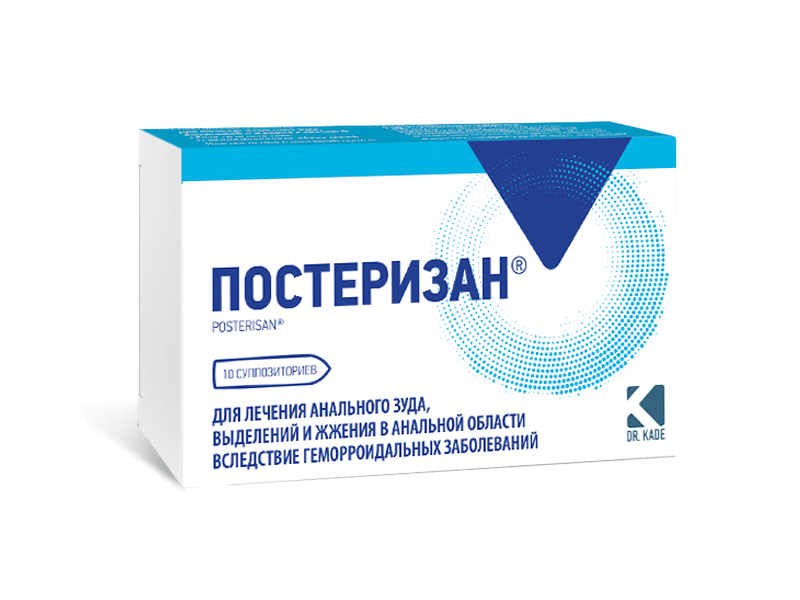
Universal drug for the hemorrhoid symptoms treatment.
Description
White to beige torpedo-shaped suppositories with a distinctive phenolic odor. On a longitudinal section - homogeneous, free of foreign inclusions, the presence of an air rod or funnel-shaped depression is allowed.
Indications
— Anal itching
— Discharge and burning in the anal area due to hemorrhoids
Dosage Regimen
Adults
The recommended daily dose is 2 suppositories.
The duration of treatment is 2–3 weeks.
Children
The safety and efficacy of Posterisan in children aged 0 to 18 years have not been established. No data are available.
Method of Administration
Insert one suppository into the anus in the morning and evening, preferably after defecation. Posterisan rectal suppositories may be used in combination with Posterisan ointment for rectal and external use.
Counterindications
— Hypersensitivity to the active substance or to any of the excipients
Adverse Reactions
Summary of Adverse Reactions
| System Organ Class
|
Common
(≥ 1/100 to < 1/10) |
Uncommon
(≥ 1/1,000 to < 1/100)
|
| General disorders and administration site conditions | Local hypersensitivity reactions (e.g., itching and burning) | Allergic contact dermatitis (due to hypersensitivity to the preservative phenol) |
Pharmacological Properties
Pharmacodynamic Properties
Pharmacotherapeutic group: angioprotectives; agents for the treatment of hemorrhoids and anal fissures for topical use; other agents for the treatment of hemorrhoids and anal fissures for topical use.
ATC code: C05AX
Mechanism of Action and Pharmacodynamic Effects
When applied topically to the skin of the anal area and the rectal mucosa, cell wall antigens and metabolic products of a standardized E. coli (Escherichia coli) bacterial culture induce a local immune response. Components of E. coli interact with antigen-presenting Langerhans cells, inducing the release of anti-inflammatory cytokines. This, in turn, reduces the production of histamine and leukotrienes, resulting in anti-inflammatory and antipruritic effects. Vascular exudation is also reduced, while blood vessel permeability and tone are normalized.
In addition, activation of antigen-presenting cells stimulates the regeneration of damaged tissues. Accelerated healing of the rectal mucosa helps reduce bleeding and pain.
Repeated administration of the standardized E. coli culture induces the proliferation of B and T lymphocytes in the regional lymph nodes and stimulates antibody production, thereby enhancing protection against infectious complications of hemorrhoidal disease.
Preclinical Safety Data
Preclinical data obtained from conventional studies of safety pharmacology, repeated-dose toxicity, genotoxicity, carcinogenic potential, and reproductive and developmental toxicity revealed no particular hazard for humans.
 English
  Русский